
This is just a short post about what Artificial Intelligence is in very basic terms, in subsequent posts I am going to go into more detail about the actual workings. But for now, I am just going to classify AI and discuss what might be needed to improve on what we already have.
First let’s define what AI is.
It stands for artificial intelligence, and in basic terms is the development of a computer system having the ability to perform tasks normally requiring human intelligence. These are tasks such as visual perception, speech recognition, decision making etc.
AI can also be described as an ‘intelligent agent’ which is any device that perceives its environment and takes action to maximise its success achieving its goals.
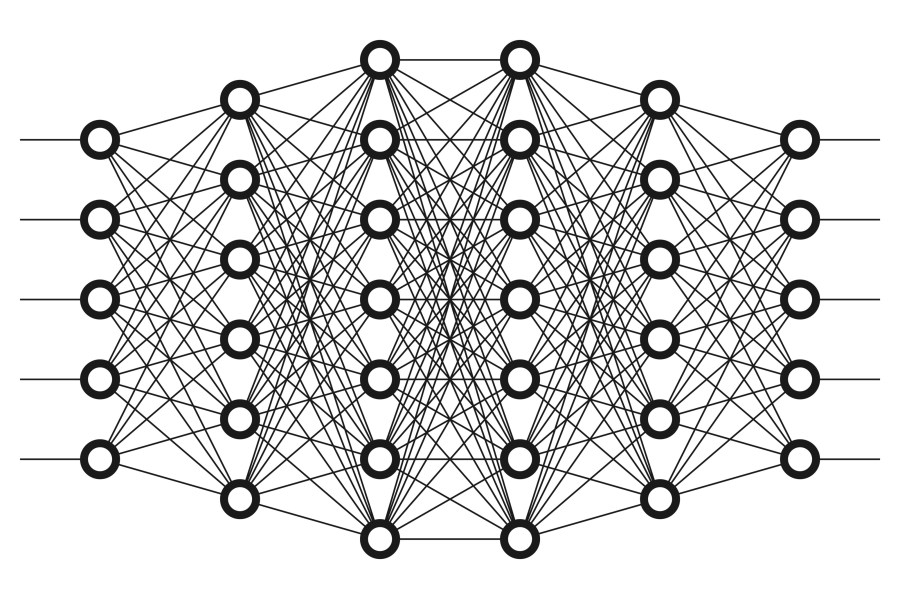
The essence of these systems is to acquire heuristic knowledge (that is facts and information) about a situation allowing it to then learn from this data, absorbing what aspects of the data will be correlated to others and thus it can then make predictions on sets of unknown data. This is really quite similar to the way that our own human brains learn to respond to the environment around us:
- We take in data (e.g. this flickering red-orange thing is called fire)
- We learn what it represents and what effect it has on the world (it is hot… do not touch)
- When presented with similar data in the future we can predict the outcome without having to actually have the answer (don’t touch fire).
For us, this is clearly quite a simple process to wrap our heads around, but as children we spend those early years trying to learn from the environment, constantly making mistakes and refining our biological algorithms to improve our understanding of the world.
For machines these simple algorithms also wouldn’t be the hardest to compute either, but the problem arises when we try to create machines capable of learning from lots of different data and classifying it into its own network from which it can constantly expand and improve. A network very similar to our own brain. In fact, we only know that such an intelligence may be possible in machines because we ourselves are the embodiment of that vision. We have/are an example of a network of connecting processes that is able to interpret and learn from its environment, thus as some sort of intelligent agent.
It would only make sense to base these artificial intelligences on what we know works – the brain. This has sort of what has been done with the deep learning and machine learning that we current use.
The problem now is that the collaboration between the two fields of neuroscience and AI no longer communicate and learn from each other in a way that would be beneficial for the development of the technology, there seems to be a saddening disparity between the two fields, with each discipline having grown in complexity and thus further apart, coagulating their own boundaries between one another. Obviously there are differences between the two subjects and the practical aspects of building an AI system may not always adhere to biological guidelines, but learning from these (proven to work) guides probably can’t hurt (probably.)
So, currently we are at the stage where we are able to create a system which is specialised to have a very specific range of abilities. This is called narrow AI (or weak AI). A narrow AI may be pretty amazing at recognising objects such as the numbers 1-10, but if you show it a dog it will have no idea. It will confidently try to make a prediction but will most definitely be wrong (like when a child only knows four animals and therefore every animal it sees is bound to be one of these.)
Regardless of the narrowness of the current AI abilities, it is clear that it has accomplished some specialised application in a number of areas:
- Perceiving its environment through “senses”
- Learning and reasoning (e.g IBM’s Deep Blue Chess machine)
- Natural Language Processing (NLP) for speech recognition or translation.
- Controlling machines (such as drones or cars)
The goal in the future will be to improve this narrow AI to the point where a machine would be able to possess a number of these narrower forms of intelligence, perhaps with an increasingly wide range of goals in numerous diverse context (perhaps even beyond the average adult) this may classify as what is known as artificial general intelligence (AGI).
I think that’s enough to conclude on, I will at some point go into the actual workings of our current AI, but for now it’s clear that we have a long way to go to develop this kind of AGI that people think of from science fiction (like Skynet in terminator). I do think that this higher-level intelligence is possible it’s just about how we get there, and I think it really comes down to this collaboration between fields where neuroscientists/computer scientists can study this living specimen of higher intellect and try to transfer it in a machine.
 Wired Together